


Your Content Is Being Scraped Right Now
The first time I realized I needed to protect content from AI, I didn’t learn it from a legal briefing or a tech newsletter. I recognized my own thinking—my cadence, my framing—coming back to me through an AI-generated answer that had never cited my work, never linked back, and never asked permission.
That moment forced a quiet but uncomfortable truth: writers are no longer just publishing into an ecosystem that distributes content. We are publishing into systems that consume it, train on it, and then speak with its echoes.
AI content scraping isn’t theoretical anymore. Automated crawlers now make up a significant share of global web traffic, and an increasing portion of that activity is designed to extract text at scale for training, retrieval, and synthetic responses. For writers, that changes the stakes. Visibility is no longer the only concern. Ownership is.
This piece follows my own path from ignoring that reality to actively defending my work, where the law still applies, where technology can help, and where writers must make deliberate choices if they want their words to remain assets rather than raw material.
What AI Content Scraping Really Is
When people hear “AI content scraping,” they often imagine something abstract or distant, as if it belongs to Silicon Valley labs rather than personal blogs. The truth is much simpler and more uncomfortable.
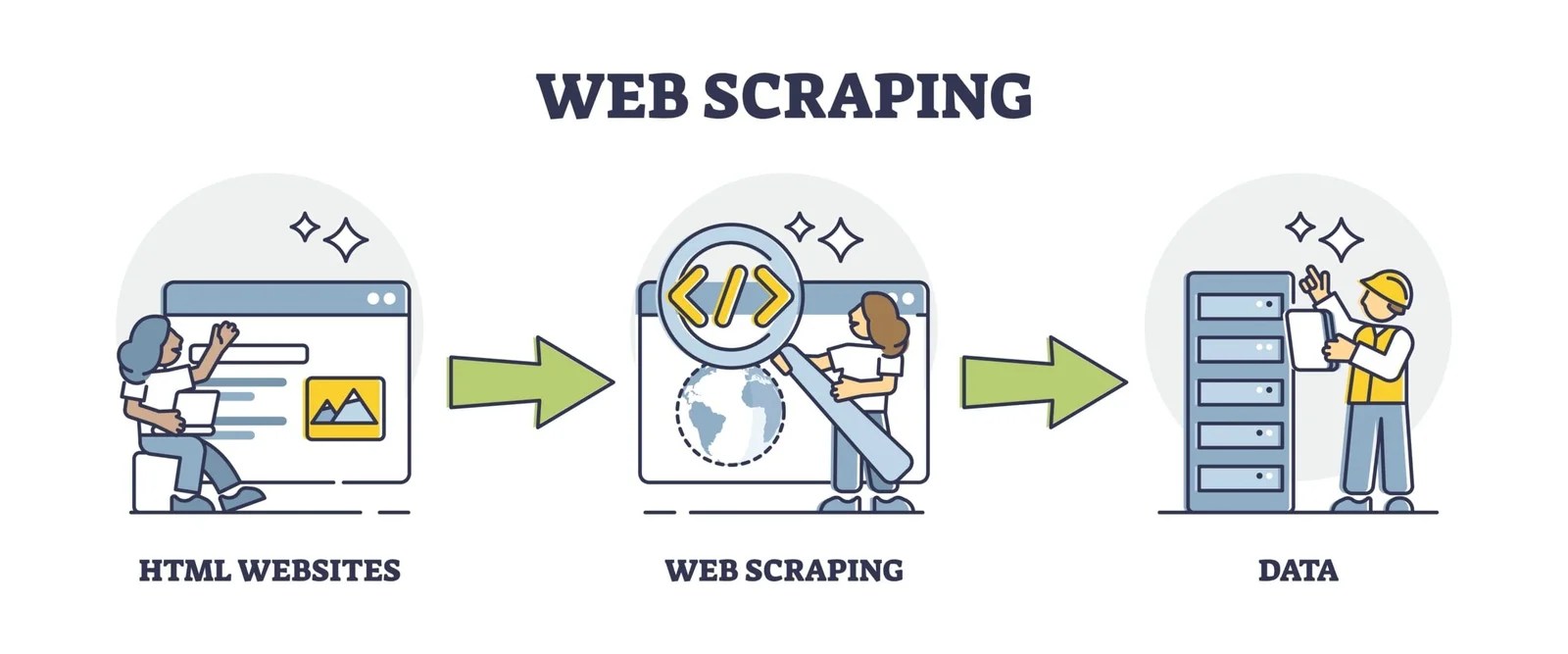
AI content scraping is the process of software visiting your site, reading your words the same way a human would, and storing them so machines can learn how to speak, explain, and answer questions using patterns pulled directly from real writers. Nothing about this requires your permission by default. If your content is public, it is readable. And if it is readable, it is collectable.
This is not a fringe practice. It is now a fast-growing industry. Market Research Future projects that the global AI-powered web scraping market will grow from approximately $7.48 billion in 2025 to more than $38 billion by 2034. That kind of expansion does not happen quietly. It reflects a system-wide shift toward automation that feeds on publicly available data, especially high-quality written content.
Why This Shift Quietly Takes Control Away From Writers
For writers, this matters because AI systems do not scrape randomly. They favor clarity, structure, originality, and depth. In other words, they favor good writing. The loss of control happens slowly at first. Your article gets read. Then summarized. Then paraphrased. Then answered through an interface that never sends readers back to you. Over time, your work stops being a destination and starts becoming training material. The value moves, but the credit does not.
This is where many writers get confused, especially those who grew up optimizing for search engines. We were taught that crawling was good, that visibility meant survival. And for a long time, that was true. Search engines index content in order to guide readers back to the source. AI systems index content to reduce the need for a source altogether. That distinction is the heart of the problem.
What makes this moment especially dangerous is that the technology is advancing faster than the norms around consent. The market is exploding. The incentives are aligned toward extraction. And most writers are still publishing as if distribution and ownership are the same thing. They are not.
Understanding this is not about becoming paranoid or anti-technology. It is about recognizing that the economics of writing have changed. When your words can be absorbed into systems worth billions, protecting them stops being optional. It becomes part of the job.
The Legal Reality: Copyright Still Protects You, But Only If You Act
For a long time, I assumed the law had already failed writers. AI companies were big, fast, and well-funded. Writers were scattered, independent, and publishing for free on the open web. It felt obvious who would win. That assumption turned out to be wrong, but incomplete.
Copyright law has not disappeared. It still protects writers in very real ways. The problem is not that the law no longer applies. The problem is that it does nothing on its own. In the age of AI, silence is often interpreted as consent, even when the law says otherwise.
The legal landscape around AI content scraping is unsettled, but unsettled does not mean lawless. It means the ground is still being shaped, and the people who show up early help determine where the lines are drawn.
Copyright and AI Training: What Hasn’t Changed
If you write original content, you own it. That principle has not changed just because machines can read faster than humans. Copyright still attaches the moment your words are fixed in a tangible form, whether that is a blog post, a newsletter, or an essay published online.
What has changed is how your work gets used after publication.
AI companies argue that training models on publicly available content is a form of transformation rather than copying. Writers argue that absorbing millions of articles into systems that replace the need to read those articles causes real economic harm. Courts are now being asked to decide where training ends and exploitation begins.
That uncertainty creates a dangerous pause. Many writers assume they should wait until the courts decide. In reality, waiting weakens your position.
What AI Companies Are Betting On
Most AI companies are not betting that writers have no rights. They are betting that writers will not enforce them.
They rely on scale, complexity, and exhaustion. When millions of pages are scraped, responsibility feels diluted. When the process is technical, creators feel unqualified to object. And when the rules are unclear, many people choose silence over friction.
That silence matters. In legal disputes, patterns of behavior help establish norms. If writers do not object, document, or restrict use, it becomes easier for companies to argue that this kind of extraction was expected, tolerated, or implied.
This is why doing nothing is not neutral. It actively shapes the future in someone else’s favor.
Fair Use Is Not a Blank Check
Fair use is often treated as a magic phrase, but it was never designed to cover industrial-scale ingestion of creative work. Courts look at purpose, amount, and market impact. Training AI systems on entire bodies of writing that then answer the same questions those writers once answered raises serious questions under all three.
The key issue is substitution. When AI-generated responses reduce the need to read the original work, the economic relationship changes. That is where legal pressure begins to build.
Writers do not need to win every argument today. They need to make their position visible. Objection, documentation, and boundaries are not just symbolic. They are the raw material that future cases depend on.
The law moves slowly, but it moves in response to patterns. Writers who act now are not overreacting. They are participating.
Legal Protections Writers Can Use Today
After understanding that copyright still applies, the next question becomes uncomfortable but practical: what does acting actually look like? Not in theory, but in the day-to-day reality of publishing online.
For me, this was the point where awareness had to turn into structure. It wasn’t about becoming litigious or paranoid. It was about leaving fewer gaps for my work to fall through.
Ownership Is Automatic, but Proof Is Power
Every original piece you publish is copyrighted the moment it exists. That protection does not require a form or a fee. But enforcement does.
When disputes arise, the writers who are taken seriously are the ones who can clearly show ownership, timing, and intent. Registering important work formalizes that proof. It signals that your writing is not casual output, but intellectual property you actively manage.
That distinction matters more in AI disputes than in traditional plagiarism cases. You are no longer arguing with another writer. You are pushing back against systems designed to absorb content at scale. Documentation changes how that pushback is received.
Terms of Use Are Not Decoration
For a long time, I treated website terms like background noise—necessary, but not meaningful. That changed when I realized how often AI companies rely on ambiguity.
Clear terms create boundaries. When your site explicitly states that automated scraping, AI training, and commercial reuse are prohibited without permission, you are no longer operating in silence. You are setting conditions.
That matters legally because consent is not assumed when restrictions are stated. Even if enforcement comes later, intent is established early. Writers who articulate boundaries create leverage, even in unsettled legal territory.
Blocking vs. Licensing Is a Strategic Choice
Not every writer benefits from an outright ban. Some content works better when it is protected entirely. Other content becomes more valuable when it is licensed deliberately.
The key shift is agency. When writers move from passive publishing to intentional permission, they stop being data sources and start being rights holders. AI companies understand contracts. They understand licenses. They do not understand silence.
Choosing how your work can be used is more powerful than hoping it will not be.
When Takedowns Matter
Takedown requests are not a cure-all, but they are not pointless either. When content appears in near-verbatim form, without attribution, and in a commercial context, writers have grounds to object.
More importantly, these actions leave records. In a world where the legal future of AI is still being negotiated, records matter. They show resistance. They show patterns. They show that creators did not quietly agree to be absorbed.
Legal protection, at this stage, is less about winning immediately and more about refusing to disappear from the conversation.
Technical Defenses: How to Slow Down AI Scrapers Without Breaking Your Site

For a long time, I believed technical protection was “not for writers.” It sounded like something only developers or large publishers could touch. Firewalls, servers, crawlers—none of it felt like my territory.
That belief turned out to be exactly what scraping depends on.
You do not need to become technical to defend your work. You only need to understand where control actually lives.
Why Robots.txt Helps, but Doesn’t Protect You
Most writers hear about robots.txt early on, usually in the context of SEO. It is often described as a gatekeeper, but that description is misleading. Robots.txt does not block anything. It requests behavior.
Search engines respect it because they are built to cooperate. AI scrapers are not always built with the same incentives.
Still, robots.txt matters. It communicates intent. It says, clearly, that certain automated access is not welcome. That signal supports every legal and contractual boundary you set elsewhere. Think of it less as a lock and more as a sign on the door that says entry is conditional.
On its own, it is not enough. In combination, it becomes meaningful.
How AI Crawlers Actually Get Blocked
Most AI systems identify themselves when they visit a site. They announce who they are through technical headers, the same way a browser does. This is where real control begins.
When those identifiers are blocked at the server level, access stops. Not symbolically. Literally.
This is not about chasing every new bot or playing whack-a-mole. It is about refusing default access. Writers who take this step are not trying to disappear from the web. They are choosing who gets to read at scale.
The important thing to understand is that this does not affect human readers. It does not harm your audience. It only changes the terms under which machines interact with your work.
Rate Limiting: The Quiet Defense Most Writers Never Hear About
Even when bots are not blocked outright, they can be slowed down. Rate limiting caps how often a single source can request pages in a short period of time. Humans read gradually. Scrapers do not.
When a site enforces reasonable limits, it becomes unattractive for mass extraction. The cost goes up. The efficiency goes down. And many scrapers simply move on. This kind of defense rarely makes headlines, but it works precisely because it is boring. It does not announce itself. It just quietly protects.
Proving Origin in a World of Rewrites
One of the most frustrating parts of AI content scraping is that the output often looks “new.” The words change. The structure shifts. The idea remains.
This is where subtle signals matter. Writers can embed stylistic fingerprints, recurring phrasing, or invisible markers that help establish origin later. These do not prevent scraping. They support attribution when disputes arise.
In a legal environment that increasingly relies on patterns and probability, showing authorship is as important as asserting it. Technical protection is not about building walls so high that no one can see your work. It is about restoring balance. When access becomes intentional instead of automatic, writers regain leverage.
Platforms & Real-World Concerns: Where Writers Actually Publish
Most writers do not publish in a vacuum. We publish on platforms, inside ecosystems we do not control, while balancing reach, income, and ownership in real time. That is where content protection stops being theoretical and starts feeling messy.
On self-hosted blogs, control is clearer. You decide the terms, the technical rules, the boundaries. On platforms like Medium or LinkedIn, that control is shared and sometimes quietly surrendered. These platforms optimize for distribution, not defense. Their priority is scale. Your priority is authorship. Those priorities overlap, but they are not the same.
This does not mean platforms are reckless or malicious. It means they operate at a layer above individual creators. When AI companies negotiate access, they negotiate with platforms, not writers. When scraping happens, it happens at scale, not article by article. Writers often discover the consequences only after the value has already moved elsewhere.
That is why many writers are rethinking where their most valuable work lives. Public platforms still matter for visibility and discovery. But deeper analysis, original reporting, and high-signal writing increasingly live behind email lists, memberships, or controlled access. Not because writers want to hide, but because ownership is easier to defend when distribution is intentional.
Email, in particular, remains quietly powerful. It is not indexed the same way. It is not scraped at scale in the same way. And it preserves a direct relationship that no algorithm can reroute. In an era of automated extraction, direct readership is not old-fashioned. It is resilient.
The real concern writers face is not whether to publish publicly or privately. It is whether they are choosing consciously or defaulting out of habit.
FAQs
Will blocking AI crawlers hurt my SEO?
Not if you do it selectively. Search engines and AI scrapers are not the same thing. Writers who confuse them often give up control unnecessarily.
Can AI legally summarize my work without credit?
Legality depends on scale, substitution, and impact. Ethically, credit should exist. Practically, it often does not. That gap is where writers must assert boundaries.
Is rewriting by AI still infringement if it’s “original”?
Original wording does not automatically mean original work. Courts look at structure, intent, and market effect. Rewrites that replace the need for the source remain vulnerable.
Do small writers even matter in this conversation?
Small writers matter most. Large publishers negotiate. Small writers get absorbed. Collective behavior begins with individual decisions.
Writing Still Has Value, If You Defend It
I did not start thinking about AI content scraping because I wanted to become defensive. I started because I wanted to keep writing without quietly giving my work away to systems designed to profit from its disappearance.
Protecting content from AI is not about fear. It is about professionalism. In the same way writers learned SEO, monetization, and audience strategy, we now have to learn boundaries. Legal ones. Technical ones. Personal ones.
The internet is changing again. The writers who last will not be the loudest or the fastest. They will be the ones who understand what they own and act like it.
If you’ve been thinking about this, questioning it, or wrestling with where your work fits in this new landscape, I’d genuinely like to hear from you. Share your experience, your concerns, or the choices you’re making in the comments. This conversation is still being written. And writers should be part of it.



0 Comments